Thursday, December 31, 2009

Monday, December 14, 2009
Tipping is not just expected, it is a way of life in Luxor.
How much?
We have heard many suggestions concerning the amounts to tip. By and large, local people who are not receivers of tips tend to suggest that you tip modestly, explaining that local wage levels are low and that big tips can represent a significant proportion of the recipients income and can distort relative income levels.People who do receive tips from foreign visitors will emphasise that workers in the tourist industry are particularly poorly paid and tend to depend on tips to supplement their income. We will leave aside the argument about whether generous tips encourage low wages.
Tips are a personal gift as a reward for good service, so the amount has to be discretionary. They will depend on the generosity of the donor and the quality of service. Nevertheless, the following indications may be helpful as a starting point.
Porters
Local businessmen normally give around LE2 per bag. Tourists are normally more generous and the rule of thumb often promoted is LE5 per bag in a hotel. Please do not be over-generous at the airport. People often give £1 per bag, because they don't have, or don't yet understand, the local currency. To put it in context, £1 is around a day's wages for most people, so it is far too much.Room staff
An Egyptian businessman will probably give around LE10 every other day. A tip of LE10 per day for a short stay, LE50 for a week or LE100 per fortnight is a good tourist tip. It can be helpful to follow the local tradition and give something every now and then, say on alternate days, rather than leaving it all to the end. It saves the staff wondering if they will get a tip or not and it can also help if you want little things done.Pool staff
This depends a lot on the services that are provided, which varies a lot between hotels. At the hotels where the pool staff provide the towels, fetch and position the loungers and so on, LE20 at the beginning, rather than at the end of your stay, will encourage good service. Another LE20 at the end won't hurt if you have been pleased.Taxis
10% is normal, but it can be difficult because the sums are so small. For a local trip, 50 piastres to LE1 is fine. LE5 would be normal for a longer journey costing LE25 or more. For a half-day on the West Bank, the normal charge would be LE80 - LE100, and a tip of LE10 - LE20 would be fair depending on how pleased you are with the tour. For a full day, LE20 would be OK as a minimum, but most tourists would give a little more if the driver has been helpful.Take into account also that if you are 'encouraged' to spend some of your West Bank time in papyrus galleries or alabaster factories, the driver gets up to 50% commission on your purchases. We tend to tip better if the driver does not automatically stop outside these places.
Restaurants
Local people tend not to tip as a percentage of the bill, but give a fixed amount, typically LE5 per person. Tourists are normally more used to tipping in relation to the cost of the meal, but don't be too fussed about the calculation. If a service charge is not included aim for something around 10% of the total, but depending on how satisfied you are and how convenient the sums work out. For example, if your bill is LE89, a tip of LE11 would be a tip of about 12% and would round up the total to convenient LE100.Even if a service charge is included you would be expected to leave some spare change, around LE3 - LE10 per person.
Tour guides
10% of the tour cost, but see the comment about commissions relating to taxi drivers and bear in mind that reps get up to 50% commission too.Cruises
Tips are normally quite regimented and are regarded as part of the cost of the cruise rather than as a 'gratuity' in the traditional sense. If you are in a group with a rep, the tipping arrangements will normally be explained at the outset or quite early on.On some trips you may be invited to pay a suggested sum up front. More usually there will be an envelope that you put your donations in and hand to reception towards the end of the trip.
If you are in a guided group, the amounts will be suggested to you. If not, work on the basis of a minimum of LE10 per person per night. In practice, LE200 per couple for a one-week cruise for all on-board staff and LE100 for the Egyptologist (if you do the excursions) is not unusual.
The tips are distributed to all staff according to a formula, so even the staff who do not normally come into direct contact with the passengers get something. This doesn't prevent you giving a little extra to people who may have provided particular services. It is not uncommon to give the room staff a little extra, not necessarily at the end of the trip, to encourage particularly good service.
When to tip
Sometimes it is handy to pay tips in advance. Wage levels are very low compared with western standards and a tip can be rewarded not only with especially attentive service, but also with favours that might not otherwise be available. Giving the room staff something every other day rather than at the end is appreciated.Tip in Egyptian pounds
It is quite difficult for local people to change foreign coins. Tip in Egyptian pounds if you can. You can get some Egyptian pounds at the bank kiosks at the airport (where they sell the visas), so you can have some local currency right from the start.Finding the small change
It is relatively easy to leave a tip at a restaurant, because the cash is usually already there as part of your change. At other times it can mean finding the right amount of local currency. Small denomination notes are often hard to get hold of. We suggest you keep hold of any LE1 and LE5 notes you get, so that they are available for tips and small purchases when you need them.Egypt holidays
Event | 2009 | 2010 |
Coptic Christmas Day | 7 Jan | 7 Jan |
| Independence Day (from UK) | 28 Feb | 28 Feb |
| Mohammed's birthday (Moulid-an-Nabi) | 9 Mar | 26 Feb |
| Coptic Easter (Sham-El-Nessim) | 19 Apr | 4 Apr |
| Labour Day | 1 May | 1 May |
| Liberation Day | 18 Jun | 18 Jun |
| National Day (anniversary of 1952 revolution) | 23 July | 23 July |
| Flooding of the Nile (Wafa'a el Nil) | 15 Aug | 15 Aug |
| Moulid of Abu el-Haggag | 8 Aug | 28 July |
| Coptic New Year | 11 Sept | 11 Sept |
| Ramadan begins | 22 Aug | 11 Aug |
| Armed Forces Day | 6 Oct | 6 Oct |
| Eid Al Fitr Ramadan ends (Bairam Feast) | 21 Sept | 10 Sept |
| Suez Victory Day | 24 Oct | 24 Oct |
| Victory Day | 23 Dec | 23 Dec |
| Hajj begins | 25 Nov | 14 Nov |
| Hajj (Eid al-Adha) | 28 Nov | 17 Nov |
| Grand Feast | 27-28 Nov | 9 Dec |
| Hijrah (Islamic New Year) | 18 Dec | 7 Dec |
News from the town

Police station, Jamboree etc have gone.
Mosque, Mina Palace and government buildings are going.
Linking Luxor and Karnak Temples
A controversial part of the plan is to restore the 3km long road connecting Luxor with Karnak. The road is clearing a 60 meter wide open space between the temples, involving the demolition of huge numbers of buildings, mostly residential but also including the town centre police station and even a mosque.
Paving on the station side of Luxor temple
Clearing the vista
Buildings have already been cleared on the Nile side of Karnak temple, so the temple is visible from the west bank and Hatshepsut's temple is visible from Karnak. This has opened up the view of Karnak temple from the road along the Nile.Buildings have been demolished in front of Luxor Temple, including the pair of old colonial style government buildings, the Mina Palace Hotel, the small shops and the old Jamboree restaurant.
Roads
Station Road (see the central Luxor map) has been widened. Shops have been demolished along its length and some new ones built further back from the road's edge. From the station there is now a clear view to the temple complex. The station itself has been redeveloped. The kiosk near McDonald's and the clock tower in the roundabout near the entrance to the Old Market have gone. The roundabout has been rebuilt and paved.The road to the east of the station, once a busy, narrow road, has been doubled in width and is now a dual carriageway.

New Winter Palace has gone. Coptic Church towers to the left
New Winter Palace
The front block of the New Winter Palace has been demolished. The rear (Pavilion) block is still open and is accessed via the Old Winter Palace. The grounds at the back are all in use as normal. The New Winter Palace is being replaced with a low-rise hotelNew Coptic Church
In contrast to the clearance of the skyline along the edge of the Nile, a new double-bell-tower coptic christian church is being built near the railway crossing to the north of the station, which can easily be seen from many parts of the east and west banks. Apparently the church is being funded by the owners of two hotels, including the owner of the Sonesta.Shopping
The old tourist shops near the temple and restaurants, such as Amoun's, have moved to the new 3 storey Savoy centre near the Mercure hotel, which has also replaced the arcade that used to be there.Market
Old Market Street has been dug up and arches and trellises have been erected. Cars, horse carriages and other vehicles are no longer allowed through Old Market Street. At the southern entrance to Old Market Street (the tourist end) an arch announcing the market has been built. The market is still quieter than the old one, partly because caleche drivers can no longer drive through, so they try to convince tourists that the market is closed and to go to a 'local market' instead. The market is not closed - ignore anyone who says it is.Ferry
There is no change (yet) on the East Bank side, but the National Ferry terminal on the West Bank is being redeveloped and will be moved slightly. The taxi car park is being converted into a park. New National Ferry boats are operating.Marina
There is a plan to build a marina on the West Bank.Other
Work is going on elsewhere in the town as well, so getting around can be very hazardous in places. Roads are not closed when work is going on. Cars vie with steam rollers for space on the road even whilst under construction.Wednesday, December 9, 2009
Egypt’s Cave Underworld Under Investigation – Egyptian archaeological team move in to find answers
Cairo, December 2nd, 2009 – Egypt’s leading Egyptologist, Dr Zahi Hawass, has revealed that an excavation team under his charge are investigating an ancient tomb at the centre of claims regarding the alleged discovery of a cave underworld beneath the Pyramids of Giza.

In August British writer and explorer Andrew Collins announced that he had rediscovered the entrance to a previously unexplored cave system, entered via a mysterious tomb several hundred meters west of the Great Pyramid.
The cave entrance was found following clues left in the 200-year-old memoirs of British diplomat and explorer Henry Salt, who recorded how in 1817 he and Italian explorer Giovanni Caviglia had investigated cave “catacombs” at Giza for a distance of “several hundred yards” before coming across a “spacious” chamber.
This chamber linked to three others of equal size, from which went various labyrinthine passages, one of which the Italian later explored for a distance of “300 feet further”.
Dr Hawass, Secretary General for Egypt’s Supreme Council of Antiquities, has now confirmed that he has ordered an all-Egyptian team to explore the tomb at the centre of the controversy.
“We are clearing this system now, and it is a Late Period catacomb, like many others around Egypt,” he stated this week. “There is no mystery about it, and there is no connection with esoteric topics. We will publish our results as part of our normal process.”
While applauding Dr Hawass’s new interest in the site, Collins remains sceptical of his motives. “We knew in August that he had started clearing the tomb,” he said. “The excavations began almost immediately after knowledge of the cave discovery hit the internet.”
Collins is also unconvinced by Hawass’s explanation of what he calls the “catacomb”. “Does his use of the term ‘system’ now suggest that he has found and entered the caves, which he previously denied even existed? he asks. “My colleagues and I have examined photographic evidence of dynastic catacombs throughout Egypt, and these all appear to be carved by human hands.
“Those at Giza are natural, and penetrate the bedrock for many hundreds of metres, perhaps following the course of local geological faulting.”
Although Dr Hawass suggests there is no mystery surrounding the “catacomb”, Collins suspects that the caves extend beneath the Second Pyramid, where ancient tradition puts the legendary tomb of Tomb of Hermes, Egypt’s legendary founder.
“This has never been found,” he added, “So perhaps it is still there, awaiting discovery, somewhere close to where Salt and Caviglia reached nearly 200 years ago.”
Collins book Beneath the Pyramids, published last month, tells the story of his discovery of the natural cave system. He has also released a YouTube video showing his exploration of the caves in 2008.
end.
For more on the discovery of Giza’s cave underworld, go to www.andrewcollins.com, or read the full story in Andrew Collins book Beneath the Pyramids (4th Dimension Press, 2009).

Fig. 1. Giza's Tomb of the Birds, designated NC 2 by George Reisner's team in 1939. They drew a rough plan of the site, but failed to record the presence of the caves.British Egyptological researcher Nigel Skinner Simpson, a friend and colleague, had been studying the memoirs of Henry Salt (1780-1827), a former British Consul General in Egypt, rediscovered in the basement of the British Museum in 2005, and published two years later by the British Museum Press (Usick and Manley, 2007). Salt was an avid explorer and collector of Egyptian antiquities. What most excited Nigel was the brief but tantalizing mention of Salt and his employee, the redoubtable Italian explorer and former sea-captain Giovanni Battista Caviglia (1770-1845), entering a vast network of "catacombs" that stretched beneath the plateau, a story he had first seen mentioned, if only briefly, in an old biography of Salt (Halls, 1834). However, this had not said where the catacombs were located, only that they lay west of the main pyramid field. This time the information was much more specific, with the site of the catacombs alluded to on Salt's rather distorted plan of the plateau.

Fig. 2 - Henry Salt (1780-1827)Inside the caves, Salt and Caviglia had journeyed for an estimated distance of "several hundred yards", crawling on hands and knees where necessary, before eventually coming across a spacious chamber that connected with three others of equal size, from which went various labyrinthine tunnels. Yet because the two men were unable to locate anything of value - no gold or treasure - Salt had given up the search, leaving his Italian colleague to continue on his own. This Caviglia did, taking one of these new cave tunnels for a distance of "300 feet further", before giving up himself.
What concerned Nigel most was the fact that no one in the Egyptological community had ever picked up on the significance of this account dated 1817, which describes an extraordinary cave complex existing beneath the Pyramids themselves.
Vyse records how during their excavations there, his team carefully removed from its interior a mummified bird of great size(Vyse, 1840). Nothing more is known of what Vyse and Perring found here, although a detailed plan of the plateau prepared by Perring shows the tomb's deeply-cut façade in the rocky north cliff, with dotted lines indicating its interior compartments, next to which is the legend "Excavated tombs and pits of bird mummies" (see also Perring, 1839-40). Whether or not Vyse and Perring explored the cave system is debatable, although Perring's published plan does hint at the fact that they at least went beyond the tomb into the complex's entrance chamber.
After this time no one is known to have visited the rock-cut tomb until American Egyptologist George Reisner came here with his team in 1939, and designated it the identity NC 2, with two other smaller tombs, also found in the north cliff, becoming NC 1 and NC 3. At least two rough plans were drawn of NC2 by Reisner's team, although neither indicate the presence of the caves, a strange oversight in itself. Nothing was written about the tomb, although a comment on one of Reisner's plans offered the thought that it might date to the eighteenth dynasty of Egyptian history, c. 1575-1307 BC. It is a theory that could well have some merit, since the exterior façade is similar to that of at least one key tomb dating to the Amarna period. This said, their interiors are entirely different in style. Whatever the age of the tomb, it seems likely that access to the caves would already have been possible, since they most likely broke through into the plateau's northern cliff face, prior to them being used to create a new tomb.

Fig. 3 - Geological map of the Giza plateau, showing the approximate location of the Tomb of the Birds (NC2) and cave entrance.

Fig. 4 - The Fifth Hour of the Duat Underworld from the Am-duat text, dating from the New Kingdom period, c. 1575-1087 BC. It is known as the Duat of Memphis, also Rostau, the name given to the Giza necropolis in pharaonic times.Moreover, the hidden realm of darkness in the Fifth Hour was ruled over by the falcon-headed god Sokar, who in the Am-duat text is shown standing on a massive two-headed snake. Sokar was the patron god of the sprawling cemeteries and pyramid fields that served the ancient city of Memphis, and in particular those at Rostau, ancient Giza. In the area once known as Upper Rostau - Giza South as it is known to Egyptologists today - textual evidence of the former presence there of an important shrine to Sokar have been unearthed (Pasquali, 2007, and Pasquali, 2008). This now lost structure featured in an annual festival involving the falcon-headed god, which celebrated the existence thereabouts of a mythical site called the Shetayet, quite literally the "Tomb of God". Ancient texts tell us that the dweller of this underground sepulchre was none other that the god Osiris, Lord of the Underworld, who lies in a secret chamber somewhere north of Memphis, i.e. in the vicinity of Giza. Other texts preserved on the walls of the temple of Edfu in southern Egypt refer to this same chthonic realm as the Duat n Ba, or "Underworld of the Soul". Here, we are told, mythical beings in an age known as zep tepi, the First Occasion, came in order to celebrate the act of First Creation around the time of a great catastrophe brought about by an "enemy snake" called the Great Leaping One (Reymond, 1969).
After the fall of Egypt to the armies of Mohammed in the seventh century AD, Arab travellers recorded very similar tales following conversations with Coptic Christian priests and monks, who inherited some of ancient Egypt's ancient wisdom. These stories spoke of subterranean passages created beneath the Great Pyramid by a legendary king named Saurid in advance of a cataclysm involving fire from heaven and a subsequent deluge. In these tunnels were placed the arts and sciences of Saurid's age in order that they might be preserved for future generations of humanity. Still further tales voiced by Sabaean pilgrims who came to Giza in medieval times from far off Harran, in what is today southeast Turkey, spoke of the Second Pyramid as marking the site of the cave-tomb of Hermes Trismegistus, with his father, Seth, or Agathodaimon, a kind of demiurge in the form of a serpent, said to repose beneath the Great Pyramid. The site of Hermes' son Sab, from whom the Sabaeans claimed direct descent, was said to have been marked by the "coloured" pyramid, i.e. the Third Pyramid of Menkaure (see Arab sources quoted in Greaves, 1646, for instance).
Critics dismiss such stories as works of fiction, but what seems possible is that they predate the Arab annexation of Egypt, and thus confirm a long held belief in the existence of a subterranean world at Giza. Yet if so, what did this lost underworld contain? Was it natural, or created by human hands, and could its entrance be located today?
It was towards the end of 1816 that the Italian explorer Giovanni Caviglia arrived in Egypt with the intention of clearing away the sand that had engulfed the body of the Sphinx since Roman times. It was an exploration he undertook with the backing of the newly appointed British Consul General, Henry Salt, who would retain the post until his untimely death outside Alexandria in 1827. Why the two men zoomed in on this area of the plateau remains unclear, although it is likely that they were influenced by rumours of pseudo-Egyptian initiations having taken place within hidden compartments accessed via some secret door in the vicinity of the leonine monument.

Fig 5 - Line drawing of Caviglia's excavations at the Sphinx after an original by Henry Salt.One perfect example of this tradition is found in "The Magic Flute" (German "Die Zauberflöte"), the Freemasonry-inspired opera written by Austrian composer Wolfgang Amadeus Mozart (1756-1791), and popular in the years leading up to Salt and Caviglia's arrival in Egypt. Not only does the hero of the opera have to undergo a series of ordeals within the darkness of an Egyptian "temple", but the Sphinx in the form of a dragon has to be defeated, all very reminiscent of the type of trials that the ancient Egyptians expected of the soul as it passed through the Duat underworld on its way to the afterlife.
In the six months that Caviglia spent excavating the Sphinx, no record of him finding hidden chambers has been preserved, although he did find hieroglyphs in some underground chambers accessed via tomb entrances in the sunken enclosure wall behind the Sphinx.
Having established this fact, it had been Salt and Caviglia's discovery of a vast network of "catacombs", or caves, during their explorations of the plateau that had most intrigued Nigel Skinner Simpson and myself. No one in the field of Egyptology had, to our knowledge, mentioned this matter in print. What is more, the commentary accompanying Salt's newly published memoirs misleads the reader by concluding that the "catacombs" in question were located in the wrong part of the plateau (an error admitted to Nigel by one of the authors in October 2009). Despite this obscuration of the facts, Nigel made a thorough examination of Salt's plan of the plateau, and in early 2008 finally traced the true location of the cave entrance. It turned out to be in the vicinity of the mysterious tomb, NC 2, the one that Perring had in 1837 referred to on his plan of the plateau as "Excavated tombs and pits of bird mummies".

Fig 6 - The section of John Perring's plan of the Giza plateau from 1837 showing the site of the Tomb of the Birds, marked with the legend "Excavated tombs and pits of bird mummies".

Fig 7 - the sky-goddess Nuit in the form of the Milky Way. The stars of Cygnus marked the position of her womb and navel.As the sky-goddess Nuit was thought to swallow the dying sun at sunset and then give birth to the new sun at dawn the next morning, the interior of her body, through which the sun-god would pass on its way to regeneration, being identified with the Duat underworld. As such, her womb, in which the spark of rebirth is attained, became the Shetayet, the conceptual Tomb of God - the perceived point of renewal of the pharaoh in his role as Osiris, Re, or, indeed, Horus. This transformation was reflected in celestial terms by the prominent presence upon the Milky Way of the stars of Cygnus, not as they appear in the night sky, but as they exist after setting within the Duat underworld.
Working with British engineer Rodney Hale, I was able to determine that the placement of the three main pyramids at Giza reflected the astronomical positions of three key stars in Cygnus, which in classical star-lore represented the wings of the celestial swan. This star-pyramid relationship is confirmed in the knowledge that from a position southeast of the plateau these same three stars would have been seen to set down into their respective pyramids around the time of their completion, c. 2500 BC.

Fig 8a - Cygnus "wing" stars overlaid on Pyramids with corresponding star setting lines, and, Fig 8b, - the Cygnus stars as they would have been seen to set from the southeast in c. 2500 BC.
Nothing of any significance, I told him.
"Perhaps what you're looking for is underground, and no one has found it yet," he offered, quite matter-of-factly. "Perhaps it's the entrance to the Hall of Records."
It was an interesting and somewhat tangential observation, but one that I was not prepared to accept.

Fig 9 - The Cygnus constellation roughly overlaid over the Giza plateau, showing the approximately position of the star Deneb in the western cemetery.The Hall of Records was the name given to Giza's lost underworld by the American psychic Edgar Cayce (1877-1945), who as early as 1925 predicted that just such a hidden chamber, containing the records of the ancients, would one day be found in the vicinity of the Sphinx. It is for this reason that the Edgar Cayce Foundation, and its research division, the Association for Research and Enlightenment (A.R.E.), has sponsored a number of high profile scientific expeditions at Giza over the past 40 years in the firm conviction that one day the Hall of Records will be found.
The rediscovery of the lost cave underworld explored in 1817 by Salt and Caviglia might go some way to fulfilling Cayce's predictions in this respect. This seemed especially so, for the entrance to these catacombs seemed to lie not far away from the Deneb spot in the Cygnus-Pyramids correlation. It would appear possible that the dynastic Egyptians saw this bright star as marking the navel of the sky-goddess in her role as the Milky Way - her "legs" being formed by the starry trail's bifurcation to create what is known to astronomers as the Dark Rift, or Cygnus Rift. It is from this perceived celestial "birth tube" that separates the Milky Way between the Cygnus region and the zodiacal constellation of Sagittarius that the much-anticipated new sun of 2012 will be born according to aficionados of the New Age movement.
It was from this same area of sky, marked by the stars of Cygnus, that the ancient Egyptians might well have believed that the soul of the deceased pharaoh would be born anew on the dawn horizon, prior to his ascension as a star among the firmament (Wells, 1992, 1993, 1994). It was probably for this reason that the King's Chamber inside the Great Pyramid was offset slightly from the monument's north-south center line in order that someone lying in its famous granite sarcophagus could have gazed upwards, through the position of the capstone, to the point where the star Deneb would have daily crossed the meridian at its highest point in the sky.

Fig 10 - The Kings Chamber's offset of 6 degrees, 15 seconds, might well reflect an alignment through the pyramid's capstone with the daily culmination of Cygnus's bright star Deneb.
Having journeyed to the site on Monday, March 3rd, Nigel, Sue and I entered the tomb and explored its every nook and cranny without discovering the entrance to any lost catacombs. After deciding to abandon our search in favour of exploring other smaller tombs in the same area, we chanced upon a small breach in a stone and mortar wall at the southeast corner of the tomb, something I had missed on our earlier visit. Peering inside, an incredible sight greeted us - a vast chasm-like chamber filled with fallen rock debris. It was a natural cave chamber, over 15 meters square, enhanced in order to make it more rectilinear in appearance. As we gazed inside, flocks of bats, no doubt disturbed by the intrusion of torchlight into their natural habitat, began escaping through the tiny exit.

Fig 11 - Breached wall inside the Tomb of the Birds leading into the cave underworld.Knowing that we could not leave without exploring further, I sank into the depths of the darkness and examined the cave's opening chamber. After exploring some cave compartments in its northwest corner, which were also littered with rock debris, I found and entered a long cave tunnel that headed roughly south. In the pitch black, I navigated a seemingly never ending carpet of huge natural boulders, caused by constant falls from the cave ceiling, which towered to as much as 15 feet (4.5 meters) in height. Strewn across the floor were discarded animal bones, just as Salt had recorded. Here and there, wedged between rocks, were perfectly preserved skulls of large vertebrates that I could not identify.

Fig 12 - Inside the opening chamber of Giza's cave underworld, looking towards the northwest.I penetrated the blackness still deeper, being careful to avoid any unseen pits and holes, our camel guide having joined me. Suddenly, a rush of warm air heralded the imminent approach of more bats that flew just inches away from our scalps. Rising too soon, one hit me squarely in the face, almost knocking me to the ground. Reaching a natural bifurcation in the cave tunnel, we felt it the right time to double back and return to the surface, having taken some 20 minutes to travel just 75 yards (69 metres). Yet I knew from Salt and Caviglia's account that the cave tunnels carried on for a minimum distance of "several hundred yards" before they reached a spacious chamber that connected with three others of equal size, from which went further labyrinthine passages that disappeared into the darkness.

Fig 13 - Andrew Collins in the north-south cave tunnel.A few days later, Nigel, Sue and I returned to the Tomb of the Birds, as we now referred to it, and Sue and I explored the cave system as Nigel kept watch in the antechamber. The deeper into the rocky darkness we got, the more we became aware that the air was becoming thinner, while the effects of the airborne bat guano were also beginning to take their toll on our bodily systems.
Despite all these problems, on our final two occasions in the caves Sue and I reached a conservative distance of around 300 feet (90 meters), maybe a lot more, before we decided to go no further due to very real safety fears. The air became so thin that we began to experience tell-tale signs of hypoxia - oxygen starvation. These peculiar sensations caused us virtually to ignore what was potentially an even greater threat, which was the presence beyond a long stone tube in front of us of an animal or creature heard displacing dirt and gravel. Whether it was a scavenging hyena, hiding out of the way, or something more exotic, we did not bother to find out.

Fig 14 - Sue Collins inside Giza's cave underworld.Nigel, Sue and I left the tomb knowing that we had rediscovered something quite extraordinary. Clearly, it was not the Hall of Records, the Tomb of Osiris or the Tomb of Hermes. What we do have here, however, is the first, indisputable proof of a natural cave system extending beneath the plateau that was most likely carved out by the actions of water tens of thousands, if not hundreds of thousands, of years ago. It stretches beneath the pyramid field, and very possibly follows the course of local faulting, perhaps reflecting the northwest to southeast orientation of the plateau's underlying geology. Although the caves are entirely natural, here and there in the deepest part of the complex I recorded the presence of incised, parallel lines etched sporadically into the cave walls. Its positioning seemed meaningless, with one set found beneath a curved rock surface. Who carved this, and when, remains a mystery. No hieroglyphic inscriptions, or graffiti of any kind, were noticed, although the limited time in the caves meant that there was much more to search and explore than we could possibly achieve on this visits. The only artefacts noted were mummy remains, including a long cigar-like object that might have contained a small animal. This was observed in the main north-south cave tunnel.

Fig 15 - Two areas of incised parallel chiselling visible in the deepest cave department reached in Giza's cave underworld.It is possible that the caves might help confirm the connection between the ancient Egyptians' belief in a Duat underworld and Giza's role as Rostau, the "mouth of the passages". Since the caves existed long before the age of the Pharaohs it is likely that they influenced decisions regarding the setting and evolution of the pyramid field. Work done with chartered engineer Rodney Hale highlighted in my book Beneath the Pyramids, demonstrates that the Tomb of the Birds figures in very basic landscape geometry found in connection with the setting of the Giza monuments. As with the geographical placement of the three pyramids, this geometry is locked into astronomical alignments featuring the stars of Cygnus for a date of 2500 BC.

Fig 16 - Based pythagorean geometry at Giza showing the apparent significance of the site of the Tomb of the Birds.

Fig 17 - A Local tomb guardian reveals that the caves are haunted by a giant snakes called el-Hanash.Afterwards, I heard more about the mysterious el-Hanash. A stone craftsman living in Nazlet el-Samman, the village of the Pyramids, told me that el-Hanash protects the "Hall of Records". Apparently, this great snake of legend spits venom in the face and blinds anyone who tries to enter this underground place and steal a great diamond that it protects. Yet one day, when the end times are near, a chosen one will find the entrance to the Hall of Records, and el-Hanash will blind him only in one eye. It will be this person that goes on to learn the secrets that the ancients knew, and in so doing gain great powers, including the ability to hold back the waters.
It is a strange tale, tainted by modern new age thought, although it seems to echo the ancient Egyptian belief that the Underworld of the Soul, or Tomb of Osiris, contains a power object, like a great egg of creation, that emits an unearthly radiance. Clearly, nothing like this was found in the caves by Salt and Caviglia. Yet they left this underground world only partially explored, as we did ourselves, providing hope that one day this mystery may finally be revealed. Until then, its secrets seem safe under the protection of el-Hanash.
His dismissal of what he calls "Collins' Cave Discovery" was suitably countered by Nigel Skinner Simpson and myself in statements issued afterwards (see http://www.andrewcollins.com/page/news/hawass.htm). I point out that the hundreds of photos and film footage of the caves ably demonstrate that we entered a natural cave system - the first ever recorded at Giza. This we navigated for a distance of at least 300 feet (90 meters), without reaching the end. Moreover, Salt's memoirs of 1817 make it clear that the caves continue on for many hundreds of yards, and eventually connect up with four "spacious" chambers, from which even further cave tunnels exit into the darkness.
Dr Hawass refuses to budge on his position, creating a stalemate whereby the news media has been extremely reticent about pursuing the subject as a potential news story. This is a shame as we now have new evidence that the caves might follow the course of local faulting beneath the plateau's Mokkatam formation. Radar satellite imagery of the Giza plateau created by the TerraSAR-X satellite, launched in 2007 and operated jointly by Astrium GmbH and the German Aerospace Centre (DLR), shows a shadow line, running from the proximity of the Tomb of the Birds towards the south-southwest, that corresponds pretty well with the positioning beneath the ground of the caves explored so far.

Fig 18 - The section of the TerraSAR-X radar satellite image of the Giza plateau showing a shadow line corresponding to the course of the cave tunnels explored so far (Picture credit: Astrium GmbH and the German Aerospace Centre (DLR)).There is nothing visible on the ground in the corresponding Google satellite image taken, coincidentally, around the same time in 2007, making this shadow line a mystery, especially as the the TerraSAR-X satellite programme is promoted as being able to detect underground features.
More incredible is the fact that the shadow line on the TerraSAR-X radar satellite image seems to connect with another wider shadow line that starts at a position corresponding to a gully in the plateau's northern cliff, just west of the Tomb of the Birds, and curves towards the Second Pyramid, where it is finally lost from sight on the north side of the monument's square base. Once again, there are no visible features on the corresponding Google satellite map to explain this anomaly (actually, a second, more fainter, shadow line is also seen on the radar satellite image. It commences in the proximity of the caves explored so far and curves towards the Second Pyramid, where it is lost, finally, as it approaches the west side of the pyramid).

Fig 19 - The curved shadow line on the TerraSAR-X radar satellite map that seems to show the course either of the caves, or localized faulting, which itself might highlight the course of subterranean caves. Not that it disappears on the northwest corner of the Second Pyramid (Astrium GmbH and the German Aerospace Centre (DLR)).It would be great to consider that this curving shadow anomaly, traced from the area of the caves reached by ourselves to the proximity of the Second Pyramid, shows the course of the caves. This is indeed possible, although the operators of the TerraSAR-X satellite have been unable to comment on the anomaly, saying only that to date they have a relatively limited understanding of just how far their radar technology is able to record sub-surface or subterranean features.
If the shadow lines here described do not mark the course of actual caves, I still suspect that they represent physical features on the plateau. I believe they trace the course of local faulting, which would itself mark the most probable path of subterranean caves carved out by the actions of water across tens if not hundreds of thousands of years.
If correct, then the fact that the shadow lines disappear in the vicinity of the Second Pyramid is very interesting indeed. Not only did the Second Pyramid mark the location of the hidden cave-tomb of Hermes in medieval Sabaean tradition, but in 1977 a scientific survey conducted jointly by the Stanford Research Institute (SRI) and the Ain Shams University, Cairo, used ground penetration radar (GPR) equipment to search for subterranean structures beneath the plateau at Giza. Aside from some interesting discoveries in the area of the Sphinx, the team, under the leadership of geophysicist Lambert T. Dolphin, detected the presence of previously unknown chambers in the vicinity of the Second Pyramid. One, at least, was situated beneath Belzoni's Chamber inside the structure, while another was found beneath the monument's northwest corner on the west side (Dolphin, 1977). Additionally, the team noted the presence of localized faulting on the north side of the Second Pyramid, adding weight to the conclusion that the shadow lines shown on the TerraSAR-X radar satellite imagery really do record the presence of either sub-surface or subterranean geological features.

Fig 20 - Hermes Trismegistus as seen in a mosaic in Sienna cathedral.Since the Tomb of the Birds is approximately 517 yards (473 meters) from the northwest corner of the Second Pyramid, I now suspect that it was into this area that Salt and Caviglia journeyed underground in 1817, this distance constituting the "several hundred yards" they travelled before reaching the reported spacious chambers, from which went other passages. If so, then this is a very interesting realization when we recall the Sabaean belief that the Second Pyramid marked the position of the cave-tomb of Hermes. Is it possible that the bird cult once associated with this site honoured Hermes, the Graeco-Egyptian form of the Egyptian god Thoth, the keeper of ancient records and guardian of the ancient wisdom? If correct then future excavations inside the tomb and caves might well reveal that the bird mummies purportedly left here as ritual offerings (and found by Vyse and Perring in 1837) contained the remains of ibises, a bird sacred to Thoth-Hermes. If the birds found here were not ibises, but raptors, such as hawks and falcons, then the cult here was probably that of Sokar, the guardian of the Duat of Memphis, or Rostau, the ancient name for Giza. Either solution will go some way to prove that the Tomb of the Birds was seen as an entrance into a cave underworld.
According to medieval Arab and European sources the cave-tomb of Hermes (Idris, or Enoch, as he was called in Arabic) housed not only the earthly remains of its owner, but also the so-called Emerald Tablet (also known as the Tabula Smaragdina, the "table of green stone") on which was written the "secret of Hermes", or the secrets of creation. Is it possible that legends relating to the presence in the cave-tomb of the Emerald Tablet is a metaphor for a previously unknown structure at Giza with green stone walls and inscriptions recording the secrets of Egyptian creation? Alternatively, perhaps the Emerald Tablet really did once exist, and was discovered here at some point in the past.

Fig 21 - Medieval illustration of Hermes Trismegistus, showing him holding the Emerald Tablet, containing the key to the secrets of the universe.If the fact that the Tomb of the Birds was once recognized as the entrance to the cave-tomb of Hermes, then it is possible that long before Salt and Caviglia got into Giza's cave underworld, others were here looking for the legendary Emerald Tablet. Just maybe they found something in the cave's deepest part, perhaps even a green stone fragment that they removed and revered afterwards as a chip from the Emerald Tablet. Whatever the answer, I sincerely believe that we have here a major discovery at Giza - one that is set to reverberate through the Egyptological world for a very long time indeed.
In August British writer and explorer Andrew Collins announced that he had rediscovered the entrance to a previously unexplored cave system, entered via a mysterious tomb several hundred meters west of the Great Pyramid.
The cave entrance was found following clues left in the 200-year-old memoirs of British diplomat and explorer Henry Salt, who recorded how in 1817 he and Italian explorer Giovanni Caviglia had investigated cave “catacombs” at Giza for a distance of “several hundred yards” before coming across a “spacious” chamber.
This chamber linked to three others of equal size, from which went various labyrinthine passages, one of which the Italian later explored for a distance of “300 feet further”.
Dr Hawass, Secretary General for Egypt’s Supreme Council of Antiquities, has now confirmed that he has ordered an all-Egyptian team to explore the tomb at the centre of the controversy.
“We are clearing this system now, and it is a Late Period catacomb, like many others around Egypt,” he stated this week. “There is no mystery about it, and there is no connection with esoteric topics. We will publish our results as part of our normal process.”
While applauding Dr Hawass’s new interest in the site, Collins remains sceptical of his motives. “We knew in August that he had started clearing the tomb,” he said. “The excavations began almost immediately after knowledge of the cave discovery hit the internet.”
Collins is also unconvinced by Hawass’s explanation of what he calls the “catacomb”. “Does his use of the term ‘system’ now suggest that he has found and entered the caves, which he previously denied even existed? he asks. “My colleagues and I have examined photographic evidence of dynastic catacombs throughout Egypt, and these all appear to be carved by human hands.
“Those at Giza are natural, and penetrate the bedrock for many hundreds of metres, perhaps following the course of local geological faulting.”
Although Dr Hawass suggests there is no mystery surrounding the “catacomb”, Collins suspects that the caves extend beneath the Second Pyramid, where ancient tradition puts the legendary tomb of Tomb of Hermes, Egypt’s legendary founder.
“This has never been found,” he added, “So perhaps it is still there, awaiting discovery, somewhere close to where Salt and Caviglia reached nearly 200 years ago.”
Collins book Beneath the Pyramids, published last month, tells the story of his discovery of the natural cave system. He has also released a YouTube video showing his exploration of the caves in 2008.
end.
For more on the discovery of Giza’s cave underworld, go to www.andrewcollins.com, or read the full story in Andrew Collins book Beneath the Pyramids (4th Dimension Press, 2009).
On March 3rd, 2008 I entered a large, yet little understood tomb on the Giza plateau. It was a place I had explored a year earlier, and on that occasion I had found nothing of consequence - no hieroglyphs, no evidence of burials - just strange letterbox-like slots in the walls, where the mummies of embalmed birds might well have been left in honour of some local deity over 2,000 years ago. I had come here again to this neglected area of the plateau, some 806 yards (740 meters) due west of the Great Pyramid, following new information that was set to challenge everything we know about the evolution of Giza's famous pyramid field.
Fig. 1. Giza's Tomb of the Birds, designated NC 2 by George Reisner's team in 1939. They drew a rough plan of the site, but failed to record the presence of the caves.
Fig. 2 - Henry Salt (1780-1827)
What concerned Nigel most was the fact that no one in the Egyptological community had ever picked up on the significance of this account dated 1817, which describes an extraordinary cave complex existing beneath the Pyramids themselves.
Explorations at Giza
The next people to have possibly come into contact with these caves after Salt and Caviglia was the British explorer Colonel Howard Vyse (1784-1853) and his colleague, the engineer John Shae Perring (1813-1869). They would appear to have chanced upon the tomb containing the caves during their routine explorations of the plateau in 1837.Vyse records how during their excavations there, his team carefully removed from its interior a mummified bird of great size(Vyse, 1840). Nothing more is known of what Vyse and Perring found here, although a detailed plan of the plateau prepared by Perring shows the tomb's deeply-cut façade in the rocky north cliff, with dotted lines indicating its interior compartments, next to which is the legend "Excavated tombs and pits of bird mummies" (see also Perring, 1839-40). Whether or not Vyse and Perring explored the cave system is debatable, although Perring's published plan does hint at the fact that they at least went beyond the tomb into the complex's entrance chamber.
After this time no one is known to have visited the rock-cut tomb until American Egyptologist George Reisner came here with his team in 1939, and designated it the identity NC 2, with two other smaller tombs, also found in the north cliff, becoming NC 1 and NC 3. At least two rough plans were drawn of NC2 by Reisner's team, although neither indicate the presence of the caves, a strange oversight in itself. Nothing was written about the tomb, although a comment on one of Reisner's plans offered the thought that it might date to the eighteenth dynasty of Egyptian history, c. 1575-1307 BC. It is a theory that could well have some merit, since the exterior façade is similar to that of at least one key tomb dating to the Amarna period. This said, their interiors are entirely different in style. Whatever the age of the tomb, it seems likely that access to the caves would already have been possible, since they most likely broke through into the plateau's northern cliff face, prior to them being used to create a new tomb.
Fig. 3 - Geological map of the Giza plateau, showing the approximate location of the Tomb of the Birds (NC2) and cave entrance.
Rumours and Stories
There is no question that what Salt and Caviglia found in 1817 is of immense importance to the Egyptological world, for rumours of the existence at Giza of a vast underworld of the pharaohs are as old as the Pyramids themselves. Ancient Egyptian creation texts, as well as an assortment of funerary literature, i.e. books of the dead, speak repeatedly of a realm of darkness existing beneath the earth, guarded by demons and snakes. It was through this confusing labyrinthine realm of the night, known as the Duat, that the deceased, in his (or her) role as the sun-god, had to navigate in order to enter an afterlife among the stars. Only by learning and using a series of different spells outlined in these texts, and left on tombs, sarcophagi or in papyrus form, could he hope to handle a sequence of trials and tribulations, involving pits of fire and venom-spitting snakes, before exiting the Duat via its eastern gate on the dawn horizon. From here the pharaoh's ba, or "spirit", usually represented by a hieroglyph showing a human-headed bird, would be free to journey on into the starry firmament.Underworld of the Soul
Egyptologists have always considered the Duat as a purely mythical concept, meant to strike fear into those hoping to gain any easy passage to heaven. Yet there are clear indications that a physical representation of this nocturnal realm existed somewhere near the Giza Pyramids. This was the conclusion of Egyptian-born Egyptologist Dr Selim Hassan (1893-1961), who for ten years was director of excavations on the plateau on behalf of the Egypt University, Cairo, and later the Service des Antiquités de l'Egypte. He proposed that the Duat's Fourth and Fifth Hours (each of its twelve compartments were represented by one of twelve symbolic hours of the night) seemed different to the rest, and bore the name Rostau which was the ancient name for Giza. Hassan therefore concluded that the descriptions of these particular "hours", as portrayed in a 3,500-year-old text known as the Am-duat, the "Book of that which is in the Underworld", were once part of a quite separate tradition that in some manner related directly to the topography of Giza (Hassan, 1946).Fig. 4 - The Fifth Hour of the Duat Underworld from the Am-duat text, dating from the New Kingdom period, c. 1575-1087 BC. It is known as the Duat of Memphis, also Rostau, the name given to the Giza necropolis in pharaonic times.
Mouth of the Passages
Adding to the belief that a physical representation of the pharaoh's underworld existed at Giza is the name Rostau, which translates as something like "mouth of the passages", an obvious allusion to the entrance to some kind of subterranean realm, perhaps the Shetayet, or Underworld of the Soul. Even after the fall of Egypt with the death of Cleopatra in the first century BC, stories regarding Giza's underworld persisted. For example, the fourth-century Graeco-Roman historian Ammianus Marcellinus (fl. AD 360-390), who travelled extensively in Egypt and wrote concerning the Pyramids, spoke of "subterranean fissures and winding passages called syringes" underneath the plateau, which, he said "those acquainted with the ancient rites, since they had fore-knowledge that a deluge was coming, and feared that the memory of the ceremonies might be destroyed, dug in the earth in many places with great labor" (Ammianus Marcellinus, Roman History, xxii, 15, 30).After the fall of Egypt to the armies of Mohammed in the seventh century AD, Arab travellers recorded very similar tales following conversations with Coptic Christian priests and monks, who inherited some of ancient Egypt's ancient wisdom. These stories spoke of subterranean passages created beneath the Great Pyramid by a legendary king named Saurid in advance of a cataclysm involving fire from heaven and a subsequent deluge. In these tunnels were placed the arts and sciences of Saurid's age in order that they might be preserved for future generations of humanity. Still further tales voiced by Sabaean pilgrims who came to Giza in medieval times from far off Harran, in what is today southeast Turkey, spoke of the Second Pyramid as marking the site of the cave-tomb of Hermes Trismegistus, with his father, Seth, or Agathodaimon, a kind of demiurge in the form of a serpent, said to repose beneath the Great Pyramid. The site of Hermes' son Sab, from whom the Sabaeans claimed direct descent, was said to have been marked by the "coloured" pyramid, i.e. the Third Pyramid of Menkaure (see Arab sources quoted in Greaves, 1646, for instance).
Critics dismiss such stories as works of fiction, but what seems possible is that they predate the Arab annexation of Egypt, and thus confirm a long held belief in the existence of a subterranean world at Giza. Yet if so, what did this lost underworld contain? Was it natural, or created by human hands, and could its entrance be located today?
Hall of Initiation
It was with questions such as these that the first European explorers arrived at Giza intent on discovering the lost treasures of the Pyramids. As far back as the ninth century the ruling caliph of the Islamic world, al-Mamoun, spent an enormous amount of time and effort tunnelling a hole through into the Great Pyramid, hoping to find gold and treasure. He failed to find the wealth de desired, but those who came after him continued the trend, forever searching for hidden entrances to subterranean tunnels and vaults that were said to connect the Great Pyramid with the nearby Sphinx monument.It was towards the end of 1816 that the Italian explorer Giovanni Caviglia arrived in Egypt with the intention of clearing away the sand that had engulfed the body of the Sphinx since Roman times. It was an exploration he undertook with the backing of the newly appointed British Consul General, Henry Salt, who would retain the post until his untimely death outside Alexandria in 1827. Why the two men zoomed in on this area of the plateau remains unclear, although it is likely that they were influenced by rumours of pseudo-Egyptian initiations having taken place within hidden compartments accessed via some secret door in the vicinity of the leonine monument.
Fig 5 - Line drawing of Caviglia's excavations at the Sphinx after an original by Henry Salt.
In the six months that Caviglia spent excavating the Sphinx, no record of him finding hidden chambers has been preserved, although he did find hieroglyphs in some underground chambers accessed via tomb entrances in the sunken enclosure wall behind the Sphinx.
Having established this fact, it had been Salt and Caviglia's discovery of a vast network of "catacombs", or caves, during their explorations of the plateau that had most intrigued Nigel Skinner Simpson and myself. No one in the field of Egyptology had, to our knowledge, mentioned this matter in print. What is more, the commentary accompanying Salt's newly published memoirs misleads the reader by concluding that the "catacombs" in question were located in the wrong part of the plateau (an error admitted to Nigel by one of the authors in October 2009). Despite this obscuration of the facts, Nigel made a thorough examination of Salt's plan of the plateau, and in early 2008 finally traced the true location of the cave entrance. It turned out to be in the vicinity of the mysterious tomb, NC 2, the one that Perring had in 1837 referred to on his plan of the plateau as "Excavated tombs and pits of bird mummies".
Fig 6 - The section of John Perring's plan of the Giza plateau from 1837 showing the site of the Tomb of the Birds, marked with the legend "Excavated tombs and pits of bird mummies".
Star Correlation
As mentioned at the beginning of this article, Sue Collins and I had visited this strange tomb in January 2007, some months before Salt's memoirs were published, in the belief that it might hold clues concerning the entrance to Giza's lost cave underworld. The reason we had zoomed in on this area was because it figured in a ground-sky correlation featuring the stars of the Cygnus constellation. Although this asterism, known more popularly as the Northern Cross, was seen in classical star lore as a swan in flight, in ancient Egypt its stars appeared to mark the position of the cosmic womb of the sky-goddess Nuit, the mother both of Osiris, the god of death and resurrection, and Re, the sun-god (see Wells, 1992, 1993, 1994. Also Maravelia, 2003). In Egyptian funerary texts, the coffin, tomb and sarcophagus of the pharaoh were themselves representations of the womb of the sky-goddess, within which his soul or spirit might begin the process of transformation and renewal. Such ideas surrounding the soul returning from whence it came, i.e. the womb of the cosmic mother, is echoed within various pre-dynastic burials, where the body of the deceased was laid to rest in a foetal position. Occasionally, the burials are found to contain the bones, bucrania or horns of bovines, a link to the idea that sky-goddesses such as Nuit and her great rival Hathor, the mother of Horus, were seen as dynastic personifications of a primeval Cow Mother, whose divine womb was associated not only with the origins of life, but also the destination of the soul in death.Fig 7 - the sky-goddess Nuit in the form of the Milky Way. The stars of Cygnus marked the position of her womb and navel.
Working with British engineer Rodney Hale, I was able to determine that the placement of the three main pyramids at Giza reflected the astronomical positions of three key stars in Cygnus, which in classical star-lore represented the wings of the celestial swan. This star-pyramid relationship is confirmed in the knowledge that from a position southeast of the plateau these same three stars would have been seen to set down into their respective pyramids around the time of their completion, c. 2500 BC.
Fig 8a - Cygnus "wing" stars overlaid on Pyramids with corresponding star setting lines, and, Fig 8b, - the Cygnus stars as they would have been seen to set from the southeast in c. 2500 BC.
The Hall of Records
Yet despite this astounding ground-sky relationship, Cygnus's brightest star, Deneb, remained to be matched with a substantial marker on the ground at Giza (it did match with a fairly large mastaba tomb in the western cemetery, but one to which very little is known, other than its designation Lepsius LG 14, given to it by the nineteenth century German Egyptologist Karl Lepsius). The matter puzzled me, and it was not until I presented my findings to a colleague that I was given an unexpected insight into this baffling mystery. Having listened to my discoveries regarding the Cygnus-Pyramids correlation, he looked at the designated Deneb spot on the plateau and said: "What's there?"Nothing of any significance, I told him.
"Perhaps what you're looking for is underground, and no one has found it yet," he offered, quite matter-of-factly. "Perhaps it's the entrance to the Hall of Records."
It was an interesting and somewhat tangential observation, but one that I was not prepared to accept.
Fig 9 - The Cygnus constellation roughly overlaid over the Giza plateau, showing the approximately position of the star Deneb in the western cemetery.
The rediscovery of the lost cave underworld explored in 1817 by Salt and Caviglia might go some way to fulfilling Cayce's predictions in this respect. This seemed especially so, for the entrance to these catacombs seemed to lie not far away from the Deneb spot in the Cygnus-Pyramids correlation. It would appear possible that the dynastic Egyptians saw this bright star as marking the navel of the sky-goddess in her role as the Milky Way - her "legs" being formed by the starry trail's bifurcation to create what is known to astronomers as the Dark Rift, or Cygnus Rift. It is from this perceived celestial "birth tube" that separates the Milky Way between the Cygnus region and the zodiacal constellation of Sagittarius that the much-anticipated new sun of 2012 will be born according to aficionados of the New Age movement.
It was from this same area of sky, marked by the stars of Cygnus, that the ancient Egyptians might well have believed that the soul of the deceased pharaoh would be born anew on the dawn horizon, prior to his ascension as a star among the firmament (Wells, 1992, 1993, 1994). It was probably for this reason that the King's Chamber inside the Great Pyramid was offset slightly from the monument's north-south center line in order that someone lying in its famous granite sarcophagus could have gazed upwards, through the position of the capstone, to the point where the star Deneb would have daily crossed the meridian at its highest point in the sky.
Fig 10 - The Kings Chamber's offset of 6 degrees, 15 seconds, might well reflect an alignment through the pyramid's capstone with the daily culmination of Cygnus's bright star Deneb.
Wonderful Discoveries
Finding that the entrance to Salt and Caviglia's cave complex was in the same general area as the Deneb spot in the Cygnus-Pyramids correlation seemed oddly relevant. So, having determined to locate Salt and Caviglia's lost cave underworld, I now sought the help and support of Edgar Cayce's A.R.E., and made preparations to fly out to Egypt at the beginning of March 2008. Our group's intention was to conduct a second investigation of the tomb, which, I now concluded, might well conceal a hidden entrance to Giza's cave underworld.Having journeyed to the site on Monday, March 3rd, Nigel, Sue and I entered the tomb and explored its every nook and cranny without discovering the entrance to any lost catacombs. After deciding to abandon our search in favour of exploring other smaller tombs in the same area, we chanced upon a small breach in a stone and mortar wall at the southeast corner of the tomb, something I had missed on our earlier visit. Peering inside, an incredible sight greeted us - a vast chasm-like chamber filled with fallen rock debris. It was a natural cave chamber, over 15 meters square, enhanced in order to make it more rectilinear in appearance. As we gazed inside, flocks of bats, no doubt disturbed by the intrusion of torchlight into their natural habitat, began escaping through the tiny exit.
Fig 11 - Breached wall inside the Tomb of the Birds leading into the cave underworld.
Fig 12 - Inside the opening chamber of Giza's cave underworld, looking towards the northwest.
Fig 13 - Andrew Collins in the north-south cave tunnel.
Danger in the Darkness
We were back in Egypt a month later, again with the support of Edgar Cayce's ARE, and twice more, as Nigel waited with walky-talky in the cave entrance area, Sue and I penetrated the caves. The thick airborne guano stifled the air, while the intense heat caused us to sweat buckets, making the experience less than pleasant. Adding still further to our rising concerns over safety in the caves was the tentative identification of a species of venomous spider commonly known as the white widow (a cousin of the black widow). Putting your hand on one of these was not an option, forcing us to cover up our skin completely when in the caves.Despite all these problems, on our final two occasions in the caves Sue and I reached a conservative distance of around 300 feet (90 meters), maybe a lot more, before we decided to go no further due to very real safety fears. The air became so thin that we began to experience tell-tale signs of hypoxia - oxygen starvation. These peculiar sensations caused us virtually to ignore what was potentially an even greater threat, which was the presence beyond a long stone tube in front of us of an animal or creature heard displacing dirt and gravel. Whether it was a scavenging hyena, hiding out of the way, or something more exotic, we did not bother to find out.
Fig 14 - Sue Collins inside Giza's cave underworld.
Fig 15 - Two areas of incised parallel chiselling visible in the deepest cave department reached in Giza's cave underworld.
Fig 16 - Based pythagorean geometry at Giza showing the apparent significance of the site of the Tomb of the Birds.
Snake Guardian
Beyond any of this is the story told to us by a local tomb guardian, whom we encountered in the vicinity of the Tomb of the Birds. He was elderly, spoke no English and is unlikely to have been influenced by new age visitors to the plateau. He knew the tomb, but refuses point blank to enter the caves, for they are the abode, he says, of a gigantic snake called el-Hanash. Apparently, it is "nine meters (30 feet)" long, and anyone attempting to enter el-kahf (Arabic for "the cave") will be squeezed to death within its powerful coils. It is a fable, of course, yet one that echoes the very ancient belief that snakes of great size inhabited the Duat underworld, and that a huge serpent called Agathodaimon, the "good spirit", was in Sabaean tradition believed to repose beneath the Great Pyramid.Fig 17 - A Local tomb guardian reveals that the caves are haunted by a giant snakes called el-Hanash.
It is a strange tale, tainted by modern new age thought, although it seems to echo the ancient Egyptian belief that the Underworld of the Soul, or Tomb of Osiris, contains a power object, like a great egg of creation, that emits an unearthly radiance. Clearly, nothing like this was found in the caves by Salt and Caviglia. Yet they left this underground world only partially explored, as we did ourselves, providing hope that one day this mystery may finally be revealed. Until then, its secrets seem safe under the protection of el-Hanash.
Aftermath - December 2009
This is the story of the rediscovery of Giza's cave underworld as recounted in my new book Beneath the Pyramids. However, so much has happened since news of the discovery became public in August that an update is necessary. Dr Zahi Hawass, the Secretary General of Egypt's Supreme Council of Antiquities, was moved by the enormous amount of internet traffic on this subject (it is featured on over 5,000 web pages and sites to date) to make a public statement denying the existence of the cave system. He suggested that we had simply got confused inside a fully recorded rock-cut tomb of 35 meters in length (see http://www.drhawass.com/node/303).His dismissal of what he calls "Collins' Cave Discovery" was suitably countered by Nigel Skinner Simpson and myself in statements issued afterwards (see http://www.andrewcollins.com/page/news/hawass.htm). I point out that the hundreds of photos and film footage of the caves ably demonstrate that we entered a natural cave system - the first ever recorded at Giza. This we navigated for a distance of at least 300 feet (90 meters), without reaching the end. Moreover, Salt's memoirs of 1817 make it clear that the caves continue on for many hundreds of yards, and eventually connect up with four "spacious" chambers, from which even further cave tunnels exit into the darkness.
Dr Hawass refuses to budge on his position, creating a stalemate whereby the news media has been extremely reticent about pursuing the subject as a potential news story. This is a shame as we now have new evidence that the caves might follow the course of local faulting beneath the plateau's Mokkatam formation. Radar satellite imagery of the Giza plateau created by the TerraSAR-X satellite, launched in 2007 and operated jointly by Astrium GmbH and the German Aerospace Centre (DLR), shows a shadow line, running from the proximity of the Tomb of the Birds towards the south-southwest, that corresponds pretty well with the positioning beneath the ground of the caves explored so far.
Fig 18 - The section of the TerraSAR-X radar satellite image of the Giza plateau showing a shadow line corresponding to the course of the cave tunnels explored so far (Picture credit: Astrium GmbH and the German Aerospace Centre (DLR)).
More incredible is the fact that the shadow line on the TerraSAR-X radar satellite image seems to connect with another wider shadow line that starts at a position corresponding to a gully in the plateau's northern cliff, just west of the Tomb of the Birds, and curves towards the Second Pyramid, where it is finally lost from sight on the north side of the monument's square base. Once again, there are no visible features on the corresponding Google satellite map to explain this anomaly (actually, a second, more fainter, shadow line is also seen on the radar satellite image. It commences in the proximity of the caves explored so far and curves towards the Second Pyramid, where it is lost, finally, as it approaches the west side of the pyramid).
Fig 19 - The curved shadow line on the TerraSAR-X radar satellite map that seems to show the course either of the caves, or localized faulting, which itself might highlight the course of subterranean caves. Not that it disappears on the northwest corner of the Second Pyramid (Astrium GmbH and the German Aerospace Centre (DLR)).
If the shadow lines here described do not mark the course of actual caves, I still suspect that they represent physical features on the plateau. I believe they trace the course of local faulting, which would itself mark the most probable path of subterranean caves carved out by the actions of water across tens if not hundreds of thousands of years.
If correct, then the fact that the shadow lines disappear in the vicinity of the Second Pyramid is very interesting indeed. Not only did the Second Pyramid mark the location of the hidden cave-tomb of Hermes in medieval Sabaean tradition, but in 1977 a scientific survey conducted jointly by the Stanford Research Institute (SRI) and the Ain Shams University, Cairo, used ground penetration radar (GPR) equipment to search for subterranean structures beneath the plateau at Giza. Aside from some interesting discoveries in the area of the Sphinx, the team, under the leadership of geophysicist Lambert T. Dolphin, detected the presence of previously unknown chambers in the vicinity of the Second Pyramid. One, at least, was situated beneath Belzoni's Chamber inside the structure, while another was found beneath the monument's northwest corner on the west side (Dolphin, 1977). Additionally, the team noted the presence of localized faulting on the north side of the Second Pyramid, adding weight to the conclusion that the shadow lines shown on the TerraSAR-X radar satellite imagery really do record the presence of either sub-surface or subterranean geological features.
Fig 20 - Hermes Trismegistus as seen in a mosaic in Sienna cathedral.
According to medieval Arab and European sources the cave-tomb of Hermes (Idris, or Enoch, as he was called in Arabic) housed not only the earthly remains of its owner, but also the so-called Emerald Tablet (also known as the Tabula Smaragdina, the "table of green stone") on which was written the "secret of Hermes", or the secrets of creation. Is it possible that legends relating to the presence in the cave-tomb of the Emerald Tablet is a metaphor for a previously unknown structure at Giza with green stone walls and inscriptions recording the secrets of Egyptian creation? Alternatively, perhaps the Emerald Tablet really did once exist, and was discovered here at some point in the past.
Fig 21 - Medieval illustration of Hermes Trismegistus, showing him holding the Emerald Tablet, containing the key to the secrets of the universe.
Friday, December 4, 2009
A short journey through Egypt, the land of the aliens
Een korte reis door Egypte, het land van de buitenaardsen
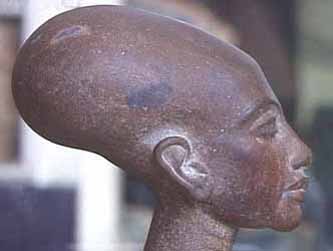
This is one of the main countries with unlimited hiding secrets. Secrets in this special time above water all mankind will come and look at a true history shows. A history that is still present in our body, which is our blood. Here's some pictures .... What is your opinion? Image of Nefertiti without hat ... Was it a deformity or ... ?
To je jeden z hlavních zemí s neomezenou skrývá tajemství. Tajemství, v tomto zvláštním čase nad vodou celé lidstvo přijde a podívat se na skutečnou historii přehlídky. Historií, která je stále přítomna v našem těle, což je naše krev. Zde je několik fotografií .... Jaký je váš názor? Obraz Nefertiti bez klobouku ... Byl to znetvoření nebo ... ?
Dit is een van de belangrijkste landen die ongekende geheimen verbergt. Geheimen die in deze bijzondere tijd allemaal boven water zullen komen en de mensheid een blik op zijn ware geschiedenis geeft. Een geschiedenis die nog altijd aanwezig is in ons lichaam, namelijk ons bloed.
Hieronder enkele foto's .... Wat is uw mening?
Beeld van Nefertiti zonder hoed ... Had zij een misvorming of ... ?
Schedel gevonden in Peru. Lebky nalezené v Peru. Skull found in Peru.

Meerdere van dergelijke schedels zijn gevonden.Several of these skulls have been found.
Některé z těchto lebek byly nalezeny.

Hier een tablet gevonden in Egypte. Kijkt u eens naar het hoofd.
Zde tabletka nalezená v Egyptě. Podívejte se na hlavu.
Here a tablet found in Egypt. Look at the head.

Kijkt u eens naar de kleine wezens die ze vasthouden.Look at the little creatures that they hold.
Podívejte se na malé živočichy, kteří mají v držení.

Deze schedels hebben deze vorm aangezien zij niet van aardse oorsprong zijn.
These skulls have this form because they are not of terrestrial origin.
Tyto lebky mají tuto formu, protože nejsou pozemského původu.
Project Isis:
Russisch onderzoek naar sarcofaag waar buitenaards wezen in ligt. Zie: Project Isis (The Tomb of the Visitor) Part 1, Parte 2 en Part 3.
Russian research into alien sarcophagus which lies in. See: Project Isis (The Tomb of the Visitor)
Ruské výzkumu cizinec, který leží sarkofág palců Viz: Projekt Isis (Hrob Návštěvník)

Als we kijken naar het symbool van het “Alziend Oog” zien we onmiddellijk de piramide. Dit teken is het teken van de Vrijmetselaars, de Illuminatie en geeft ons een directe verwijzing naar de Annunaki. En hier zijn we op het punt waar alles begon.
Wie zijn de Annunaki?
Annunaki die voor “God” spelen. De Annunaki die naar de Aarde kwamen en slaven crëeerden door meerdere soorten D.N.A samen te voegen en hiermee een recht oplopende denkende mens te produceren.
If we consider the symbol of the "Eye of 'we see immediately the pyramid. This sign is the sign of the Freemasons, the Illuminati and gives us a direct reference to the Anunnaki. And here we are at the point where everything started.
Who are the Annunaki?
Annunaki play for "God". The Anunnaki who came to Earth and slaves created by combining several types of DNA and thus a right thinking man ascending to produce?
Vezmeme-li symbol "Eye of 'vidíme okamžitě pyramidy. Toto znamení je znamením Freemasons, Illuminati a dává nám přímý odkaz na Anunnaki. A tady jsme na místě, kde všechno začalo.
Kdo jsou Annunaki?
Annunaki pro "Bůh" her. Anunnaki, kteří přišli na Zemi a otroky vytvořen kombinací několika typů DNA, a tedy právo myšlení člověka vystupovat vyrábět?
Wetenschappers staan tegenwoordig nog voor een raadsel aangezien er een tijdspanne mist tussen de Homo Sapiens en de Homo Erectus. Er is een missing link. Maar dit was de tijd dat de Annunaki op aarde waren. En dit was niet de eerste reis die ze maakten naar onze van oorsprong prachtige planeet. Zoals Aids is gecreeërd in een lab, zo zijn wij gecreeërd door de “Annunaki”.
“Zij die uit de hemel kwamen” en zoals in de bijbel word genoemd “de Elohim” of bekend als de “Nephilim”, (afstammeling daarvan is de “Anakin”) In Egypte spreekt men van de 9 goden die van boven naar beneden kwamen, en in de Sumerische kleitabletten (Sumerië is voormalig Mesopotamië) vind men exact hetzelfde. Deze Sumerische kleitabletten vertellen het verhaal hoe de mens is ontstaan, en laten ons d.m.v de afbeeldingen het gehele proces van reageerbuis techniek zien.
En de daarin vermelde goden vind men terug in Egypte, precies dezelfde gebeurtenis, alleen andere namen voor de goden. Ik zal een voorbeeld geven. Als men het beeldje neemt van Maria met kind, dan gaan we een stukje verder terug in de tijd, voor Christus en dan zien we hetzelfde beeldje in Egypte wat Isis en kind voorstelt.
Maar…onze geschiedenis is nog veel langer!!! Ook voor Egypte was er leven. Dit was de tijd van de Annunaki. Als men de geschiedenis daarvan bekijkt dan zal men al gauw zien dat Isis zelfs verder terug in de tijd gaat en ver voor de Egyptische tijd en vind men hetzelfde weer met de naam "Inanna".
Scientists today are still a mystery as there is a gap between the fog and the Gay Gay sapiens erectus. There is a missing link. But this was the time when the Anunnaki on earth. And this was not the first trip they made to our beautiful planet of origin. As AIDS was created in a lab, so we created the "Anunnaki".
"Those who came from heaven and as the Bible is called" The Elohim "or known as the" Nephilim "(descendant of the" Anakin ") in Egypt speaks of the 9 gods who came down from above and in Sumerian clay tablets (Sumer is former Mesopotamia) we find exactly the same. This Sumerian clay tablets tell the story of how man was created, and let us through the entire process the images of test tube techniques.
And therein we find gods back in Egypt, the same event, only different names for the gods. I will give an example. If one takes the statue of Mary with child, then we go a little further back in time, for Christ and we see the same statue in Egypt as Isis and child suggests.
But ... our history is much longer! For Egypt, there was life. This was the time of the Annunaki. If one looks at its history will soon be seen that Isis even further back in time and goes far to the Egyptian times and find it again with the same name "Inanna".
Vědci se dnes stále záhadou, jak je rozdíl mezi mlhou a Gay Gay sapiens erectus. Tam je chybějící článek. Ale to bylo v době, kdy Anunnaki na Zemi. A to nebyl první cesta, že se na naši krásnou planetu původu. AIDS byl vytvořen v laboratoři, a tak jsme vytvořili "Anunnaki".
"Ti, kdo přišli z nebe, jako je Bible nazývá" Elohim "nebo známá jako" Nephilim "(potomek" Anakin "), v Egyptě se hovoří o 9 bohy, kteří sestoupili z výše uvedených a sumerské hliněné tabulky (Sumer je bývalá Mezopotámie) najdeme úplně stejně. Tento sumerské hliněné tabulky vyprávět příběh o tom, jak byl člověk vytvořil, a nechal nás provede celým procesem obrazy technik zkumavky.
A v něm najdeme bohy zpátky do Egypta, stejnou událost, jen různá jména pro bohy. Uvedu příklad. Pokud se vezme socha Panny Marie s dítětem, pak jdeme kousek dál zpět v čase, pro Krista a vidíme stejné jako socha v Egyptě Isis a dítě naznačuje.
... Ale naše historie je mnohem delší! Pro Egypt, tam byl život. To bylo v době Annunaki. Pokud se podíváme na její historii budou brzy vidět, že Isis ještě zpět v čase a sahá daleko do egyptského týmu a najdete jej znovu se stejným názvem "Inanna".
Inanna


Zoals Isis de dochter van Ra was, zo was zij de dochter van Anu. Zoals Ra verbannen werd uit Egypte zo werd Anu verbannen naar de uithoek van ons zonnestelsel, naar de planeet Nibiru (Phaeton). Ziet u: hetzelfde verhaal, alleen deze stamt uit de allereerste tijden die de meeste mensen helemaal niet kennen.
Dan komt men uit in de Goddelijke Dynastieën, de hemelse dynastie. De tijd dat de goden op aarde waren.
De slang die de Egyptenaren op hun hoofd dragen is het teken van de Annunaki.
Het tweede voorbeeld:
De god Thoth.
In Egypte bekend als Thoth, maar in Griekenland als Hermes Trimesgistos. Hermes Trimesgistos betekent “de driemaal grote”. Dit omdat hij tot het reuzengeslacht behoorde dat volgens de tradities tot de eerste hemelse dynastie behoorde.
Reuzen?
Kennen wij niet de reuzen uit de bijbel? Mozes spreekt over de plaag van de reuzen, sinds het begin der tijden. En als we lezen over het ooit zo mooie Atlantis dat ten onder ging door een grote ramp en waar de reuzen heersten? De oorlogen tussen de reuzen?
Zijn er niet gigantische skeletten en schedels gevonden? Daar hebben we het punt! Thoth was de overbrenger van: Geneeskunde, Astronomie,Astrologie, de schrijfkunst, de bouwkunst, de Arithmetica (getallenleer). De “Heilige Geometrie”.
Tevens was hij de inspirator van de oudste filosofie, en de stichter van een religie rond een unieke godheid. Hij word ook wel aangeduid met Enoch, en waarschijnlijk de grootmeester achter de vele bouwwerken, waaronder de piramiden. Thoth, of Hermes heeft een atlantische achtergrond en was een van de Elohim.
Op een steen in de Leeuwenpoort van Mycene staat de tekst: “De Egyptenaren stammen af van de zoon van Thoth, priester van Atlantis”en is getekend door Hermes II (kleinzoon). Er word verteld dat hij als scheidsrechter optrad in de strijd tussen de Godenreuzen en de Titanen.
Jako Isis byla dcerou Ra, tak ona byla dcera Anu. Jak Ra byl vyhoštěn z Egypta, jak Anu byl vykázán na rohu naší sluneční soustavy, planety Nibiru (Phaeton). Uvidíte: stejný příběh, jen to přijde z úplně poprvé, že většina lidí neví. Pak jeden přijde k Božské dynastie, nebeské dynastie. Čas, který bohové na zemi.
Hada, že Egypťané na jejich hlavu, je znamením Annunaki.
Druhý příklad:
Bůh Thoth.
Známá v Egyptě jako Thoth, ale v Řecku jako Hermes Trimesgistos. Hermes Trimesgistos znamená "třikrát velký". Vzhledem k tomu, že patří k obří pohlaví, podle tradice první nebeské dynastie patřila.
Obři?
Nemáme obry Bible? Mojžíš hovoří o ráně obrů, od počátku času. A když čteme o jednou velkou Atlantis podlehnout velkou katastrofou, a kde obři zvítězil? Války mezi obry?
Nebyla nalezena obří kostry a lebky? Vzhledem k tomu máme bod! Thoth byl nositelem: lékařství, astronomie, astrologie, umění psaní, architektura, Aritmetické (aritmetický). "Posvátná geometrie".
On byl také inspirace z antické filosofie, a zakladatel náboženství kolem unikátní božstvo. Dostane také volal Enoch, a pravděpodobně velitel za mnoho budov, včetně pyramid. Thoth, Hermes nebo má zázemí a Atlantiku byla jedním z Elohim.
Na skále v Lví brána Mykény je text: "Egypťané jsou potomky syna Thoth, kněz Atlantis" a byl podepsán Hermes II (vnuk). Budou řekl, že jednal jako rozhodčí v bitvě mezi bohy a Titány Giants.
Hij was een raadgever van Osiris en Isis en word aangeduid als de beschermvader en stamvader van de goede reuzen die de kennis brachten.
Als vader van de alchemie, kreeg hij bekendheid door zijn “Tabula Smaragda” de “smaragden tafel” waarop de alchemistische basisformule werd gegraveerd.
In Atlantis en Egypte was alchemie een feit: Zij konden van basismetalen goud maken.
Het Atlantische ras vereerde de zon op de toppen van hun piramiden en waren in staat het aardmagnetisme en de zonne-energie aan te wenden. Dit had een geweldige invloed op flora en fauna. Tevens word er over hem vermeld dat vlak voor de ondergang van Atlantis, Thoth met zijn gevolg van hoge priesters vertrok in grote ruimteschepen om een nieuw thuis en een nieuwe beschaving te scheppen.
Er staat geschreven dat dit land Khem werd genoemd, nu bekend als Egypte. Er staat geschreven dat Thoth en anderen uit Atlantis informatie bewaard en verborgen zouden hebben op een locatie die bekend is als de “Zalen van Amentie” een naam die “mensheid”betekend. Deze ruimte zal zich bevinden onder de rechterpoot van de sfinx.
De zaal die aanwezig zal zijn onder de sfinx word ook wel genoemd “Hall of Records” en is een onderaardse gallerij, het heiligdom van Thoth. Deze onderaardse ruimten zijn inderdaad ontdekt, en worden dwarsgezeten door Mnh. Zahi Hawass. Deze meneer is de directeur van het Cairo museum en tevens de baas over alle archeologische opgravingen.
In vele geschriften zijn er vermeldingen gemaakt over de vernietiging van Atlantis, dat getroffen werd door de zondvloed, vuur een aardbevingen. De Egyptenaren spraken hierover, de Maya’s , de Indiërs en bepaalde Afrikaanse stammen. De overlevenden van de ramp zijn gevlucht naar andere landen.
Cherokee indianen van Noord Amerika zijn ervan overtuigd dat hun voorouders die eerst op Atlantis woonden, en na de ondergang naar Amerika emigreerden, van de Pleiaden kwamen.
Als we kijken naar het verhaal van Thoth, die vlak voor de grote ramp vertrekt in zijn ruimteschip, herkennen we hier dan niet het verhaal van Noah?
De ark van Noah, was in mijn ogen een genenbank. “Wanneer de vloed komt ga dan aan boord en sluit de poorten af” (bijbelse versie).
In een van de Sumerische teksten staat:
Wanneer Sjamasj in de avond een beving veroorzaakt, ga dan aan boord en sluit de poorten af. Deze Sjamash is geen “iets”maar een HIJ.
Sjamasj was de hoofdcommandant van de raketbasis. Op het moment dat de beving plaatsvond, kwam dat door niets minder dan geluid van opstijgende raketten (ruimteschepen). Het schiereiland van Egypte, Sinai ,betekend ook letterlijk “Het land van de Raketten”.
Let u eens op de vorm van de vele moskeeën:
Byl poradcem Isis a Osiris, a stát se známý jako ochranný otec a předek velké obry, kteří přinesli znalosti.
Jako otec alchymie, dostal on je známý pro své "Tabula Smaragda 'smaragd stolu", na nichž bylo vyryto alchymistické formule základny. Atlantis a Egypt byl ve skutečnosti alchymie: Mohli by dělat zlato z obecných kovů.
Závod Atlantik uctívali slunce na vrcholech jejich pyramidy a byli schopni pozemského magnetismu a solární energie k použití. To mělo obrovský dopad na flóru a faunu. Je také zmínil se o něm, že těsně před zničením Atlantidy, Thoth se svým doprovodem vysokých kněží odešel ve velkých kosmických nový domov a vytvořit novou civilizaci.
To je napsáno, že tato země byla nazývána Khem, nyní známý jako Egypt. Říká se, že Thoth a další informace uložené v Atlantis a bude mít skryté v místě známé jako "ubytovny pro Amentie" jméno "lidskost" se rozumí. Tento prostor se nachází pod pravou tlapou of the Sphinx.
V místnosti, které budou v rámci této sfingy jsem také volal "Hall of Records" je podzemní galerii, svatyni Thoth. Tyto dutiny jsou ve skutečnosti zjištěny, a je obtěžováno Mnh. Zahi Hawass. Tento pán je ředitelem muzea Káhiry a šéf všech archeologických vykopávek.
V mnoha spisech se záznamy o zničení Atlantidy, která byla postižena povodněmi, požár, zemětřesení. Egypťané hovořili o Maya, Indové a některých afrických kmenů. Ti, kdo přežili katastrofu uprchli do jiných zemí.
Čerokí Indiáni v Severní Americe, jsou přesvědčeni, že jejich předky, kteří žili na první Atlantis, a emigroval do Ameriky po zhroucení, přišel z Plejád.
Pokud se podíváme na příběh Thoth, kteří těsně před katastrofou velké listy ve své kosmické lodi, nepoznáváme příběh Noeho?
Archa Noemova, byl v mých očích genové banky. "Když příliv půjde na palubě a zavřít vrata" (Bible verze).
V jednom ze sumerských textech je:
Když Shamash večer způsobil třes, pak jděte na palubě a zavřít vrata. Sjamash To není "něco", ale JE.
Shamash byl hlavní velitel protiraketové základny. V době, kdy zemětřesení došlo, že nebylo nic menšího, než hluk vzestupně raket (kosmické lodě). Poloostrov Egypt, Sinai, doslova znamená "Země Střely".
Prosím dohodnout na podobě mnoho mešit:


This is one of the main countries with unlimited hiding secrets. Secrets in this special time above water all mankind will come and look at a true history shows. A history that is still present in our body, which is our blood. Here's some pictures .... What is your opinion? Image of Nefertiti without hat ... Was it a deformity or ... ?
To je jeden z hlavních zemí s neomezenou skrývá tajemství. Tajemství, v tomto zvláštním čase nad vodou celé lidstvo přijde a podívat se na skutečnou historii přehlídky. Historií, která je stále přítomna v našem těle, což je naše krev. Zde je několik fotografií .... Jaký je váš názor? Obraz Nefertiti bez klobouku ... Byl to znetvoření nebo ... ?
Hieronder enkele foto's .... Wat is uw mening?
Beeld van Nefertiti zonder hoed ... Had zij een misvorming of ... ?
Schedel gevonden in Peru. Lebky nalezené v Peru. Skull found in Peru.
Meerdere van dergelijke schedels zijn gevonden.Several of these skulls have been found.
Některé z těchto lebek byly nalezeny.
Hier een tablet gevonden in Egypte. Kijkt u eens naar het hoofd.
Zde tabletka nalezená v Egyptě. Podívejte se na hlavu.
Here a tablet found in Egypt. Look at the head.
Kijkt u eens naar de kleine wezens die ze vasthouden.Look at the little creatures that they hold.
Podívejte se na malé živočichy, kteří mají v držení.
Deze schedels hebben deze vorm aangezien zij niet van aardse oorsprong zijn.
These skulls have this form because they are not of terrestrial origin.
Tyto lebky mají tuto formu, protože nejsou pozemského původu.
Project Isis:
Russisch onderzoek naar sarcofaag waar buitenaards wezen in ligt. Zie: Project Isis (The Tomb of the Visitor) Part 1, Parte 2 en Part 3.
Russian research into alien sarcophagus which lies in. See: Project Isis (The Tomb of the Visitor)
Ruské výzkumu cizinec, který leží sarkofág palců Viz: Projekt Isis (Hrob Návštěvník)
Als we kijken naar het symbool van het “Alziend Oog” zien we onmiddellijk de piramide. Dit teken is het teken van de Vrijmetselaars, de Illuminatie en geeft ons een directe verwijzing naar de Annunaki. En hier zijn we op het punt waar alles begon.
Wie zijn de Annunaki?
Annunaki die voor “God” spelen. De Annunaki die naar de Aarde kwamen en slaven crëeerden door meerdere soorten D.N.A samen te voegen en hiermee een recht oplopende denkende mens te produceren.
If we consider the symbol of the "Eye of 'we see immediately the pyramid. This sign is the sign of the Freemasons, the Illuminati and gives us a direct reference to the Anunnaki. And here we are at the point where everything started.
Who are the Annunaki?
Annunaki play for "God". The Anunnaki who came to Earth and slaves created by combining several types of DNA and thus a right thinking man ascending to produce?
Vezmeme-li symbol "Eye of 'vidíme okamžitě pyramidy. Toto znamení je znamením Freemasons, Illuminati a dává nám přímý odkaz na Anunnaki. A tady jsme na místě, kde všechno začalo.
Kdo jsou Annunaki?
Annunaki pro "Bůh" her. Anunnaki, kteří přišli na Zemi a otroky vytvořen kombinací několika typů DNA, a tedy právo myšlení člověka vystupovat vyrábět?
Wetenschappers staan tegenwoordig nog voor een raadsel aangezien er een tijdspanne mist tussen de Homo Sapiens en de Homo Erectus. Er is een missing link. Maar dit was de tijd dat de Annunaki op aarde waren. En dit was niet de eerste reis die ze maakten naar onze van oorsprong prachtige planeet. Zoals Aids is gecreeërd in een lab, zo zijn wij gecreeërd door de “Annunaki”.
“Zij die uit de hemel kwamen” en zoals in de bijbel word genoemd “de Elohim” of bekend als de “Nephilim”, (afstammeling daarvan is de “Anakin”) In Egypte spreekt men van de 9 goden die van boven naar beneden kwamen, en in de Sumerische kleitabletten (Sumerië is voormalig Mesopotamië) vind men exact hetzelfde. Deze Sumerische kleitabletten vertellen het verhaal hoe de mens is ontstaan, en laten ons d.m.v de afbeeldingen het gehele proces van reageerbuis techniek zien.
En de daarin vermelde goden vind men terug in Egypte, precies dezelfde gebeurtenis, alleen andere namen voor de goden. Ik zal een voorbeeld geven. Als men het beeldje neemt van Maria met kind, dan gaan we een stukje verder terug in de tijd, voor Christus en dan zien we hetzelfde beeldje in Egypte wat Isis en kind voorstelt.
Maar…onze geschiedenis is nog veel langer!!! Ook voor Egypte was er leven. Dit was de tijd van de Annunaki. Als men de geschiedenis daarvan bekijkt dan zal men al gauw zien dat Isis zelfs verder terug in de tijd gaat en ver voor de Egyptische tijd en vind men hetzelfde weer met de naam "Inanna".
Scientists today are still a mystery as there is a gap between the fog and the Gay Gay sapiens erectus. There is a missing link. But this was the time when the Anunnaki on earth. And this was not the first trip they made to our beautiful planet of origin. As AIDS was created in a lab, so we created the "Anunnaki".
"Those who came from heaven and as the Bible is called" The Elohim "or known as the" Nephilim "(descendant of the" Anakin ") in Egypt speaks of the 9 gods who came down from above and in Sumerian clay tablets (Sumer is former Mesopotamia) we find exactly the same. This Sumerian clay tablets tell the story of how man was created, and let us through the entire process the images of test tube techniques.
And therein we find gods back in Egypt, the same event, only different names for the gods. I will give an example. If one takes the statue of Mary with child, then we go a little further back in time, for Christ and we see the same statue in Egypt as Isis and child suggests.
But ... our history is much longer! For Egypt, there was life. This was the time of the Annunaki. If one looks at its history will soon be seen that Isis even further back in time and goes far to the Egyptian times and find it again with the same name "Inanna".
Vědci se dnes stále záhadou, jak je rozdíl mezi mlhou a Gay Gay sapiens erectus. Tam je chybějící článek. Ale to bylo v době, kdy Anunnaki na Zemi. A to nebyl první cesta, že se na naši krásnou planetu původu. AIDS byl vytvořen v laboratoři, a tak jsme vytvořili "Anunnaki".
"Ti, kdo přišli z nebe, jako je Bible nazývá" Elohim "nebo známá jako" Nephilim "(potomek" Anakin "), v Egyptě se hovoří o 9 bohy, kteří sestoupili z výše uvedených a sumerské hliněné tabulky (Sumer je bývalá Mezopotámie) najdeme úplně stejně. Tento sumerské hliněné tabulky vyprávět příběh o tom, jak byl člověk vytvořil, a nechal nás provede celým procesem obrazy technik zkumavky.
A v něm najdeme bohy zpátky do Egypta, stejnou událost, jen různá jména pro bohy. Uvedu příklad. Pokud se vezme socha Panny Marie s dítětem, pak jdeme kousek dál zpět v čase, pro Krista a vidíme stejné jako socha v Egyptě Isis a dítě naznačuje.
... Ale naše historie je mnohem delší! Pro Egypt, tam byl život. To bylo v době Annunaki. Pokud se podíváme na její historii budou brzy vidět, že Isis ještě zpět v čase a sahá daleko do egyptského týmu a najdete jej znovu se stejným názvem "Inanna".
Inanna
Zoals Isis de dochter van Ra was, zo was zij de dochter van Anu. Zoals Ra verbannen werd uit Egypte zo werd Anu verbannen naar de uithoek van ons zonnestelsel, naar de planeet Nibiru (Phaeton). Ziet u: hetzelfde verhaal, alleen deze stamt uit de allereerste tijden die de meeste mensen helemaal niet kennen.
Dan komt men uit in de Goddelijke Dynastieën, de hemelse dynastie. De tijd dat de goden op aarde waren.
De slang die de Egyptenaren op hun hoofd dragen is het teken van de Annunaki.
Het tweede voorbeeld:
De god Thoth.
In Egypte bekend als Thoth, maar in Griekenland als Hermes Trimesgistos. Hermes Trimesgistos betekent “de driemaal grote”. Dit omdat hij tot het reuzengeslacht behoorde dat volgens de tradities tot de eerste hemelse dynastie behoorde.
Reuzen?
Kennen wij niet de reuzen uit de bijbel? Mozes spreekt over de plaag van de reuzen, sinds het begin der tijden. En als we lezen over het ooit zo mooie Atlantis dat ten onder ging door een grote ramp en waar de reuzen heersten? De oorlogen tussen de reuzen?
Zijn er niet gigantische skeletten en schedels gevonden? Daar hebben we het punt! Thoth was de overbrenger van: Geneeskunde, Astronomie,Astrologie, de schrijfkunst, de bouwkunst, de Arithmetica (getallenleer). De “Heilige Geometrie”.
Tevens was hij de inspirator van de oudste filosofie, en de stichter van een religie rond een unieke godheid. Hij word ook wel aangeduid met Enoch, en waarschijnlijk de grootmeester achter de vele bouwwerken, waaronder de piramiden. Thoth, of Hermes heeft een atlantische achtergrond en was een van de Elohim.
Op een steen in de Leeuwenpoort van Mycene staat de tekst: “De Egyptenaren stammen af van de zoon van Thoth, priester van Atlantis”en is getekend door Hermes II (kleinzoon). Er word verteld dat hij als scheidsrechter optrad in de strijd tussen de Godenreuzen en de Titanen.
Jako Isis byla dcerou Ra, tak ona byla dcera Anu. Jak Ra byl vyhoštěn z Egypta, jak Anu byl vykázán na rohu naší sluneční soustavy, planety Nibiru (Phaeton). Uvidíte: stejný příběh, jen to přijde z úplně poprvé, že většina lidí neví. Pak jeden přijde k Božské dynastie, nebeské dynastie. Čas, který bohové na zemi.
Hada, že Egypťané na jejich hlavu, je znamením Annunaki.
Druhý příklad:
Bůh Thoth.
Známá v Egyptě jako Thoth, ale v Řecku jako Hermes Trimesgistos. Hermes Trimesgistos znamená "třikrát velký". Vzhledem k tomu, že patří k obří pohlaví, podle tradice první nebeské dynastie patřila.
Obři?
Nemáme obry Bible? Mojžíš hovoří o ráně obrů, od počátku času. A když čteme o jednou velkou Atlantis podlehnout velkou katastrofou, a kde obři zvítězil? Války mezi obry?
Nebyla nalezena obří kostry a lebky? Vzhledem k tomu máme bod! Thoth byl nositelem: lékařství, astronomie, astrologie, umění psaní, architektura, Aritmetické (aritmetický). "Posvátná geometrie".
On byl také inspirace z antické filosofie, a zakladatel náboženství kolem unikátní božstvo. Dostane také volal Enoch, a pravděpodobně velitel za mnoho budov, včetně pyramid. Thoth, Hermes nebo má zázemí a Atlantiku byla jedním z Elohim.
Na skále v Lví brána Mykény je text: "Egypťané jsou potomky syna Thoth, kněz Atlantis" a byl podepsán Hermes II (vnuk). Budou řekl, že jednal jako rozhodčí v bitvě mezi bohy a Titány Giants.
Hij was een raadgever van Osiris en Isis en word aangeduid als de beschermvader en stamvader van de goede reuzen die de kennis brachten.
Als vader van de alchemie, kreeg hij bekendheid door zijn “Tabula Smaragda” de “smaragden tafel” waarop de alchemistische basisformule werd gegraveerd.
In Atlantis en Egypte was alchemie een feit: Zij konden van basismetalen goud maken.
Het Atlantische ras vereerde de zon op de toppen van hun piramiden en waren in staat het aardmagnetisme en de zonne-energie aan te wenden. Dit had een geweldige invloed op flora en fauna. Tevens word er over hem vermeld dat vlak voor de ondergang van Atlantis, Thoth met zijn gevolg van hoge priesters vertrok in grote ruimteschepen om een nieuw thuis en een nieuwe beschaving te scheppen.
Er staat geschreven dat dit land Khem werd genoemd, nu bekend als Egypte. Er staat geschreven dat Thoth en anderen uit Atlantis informatie bewaard en verborgen zouden hebben op een locatie die bekend is als de “Zalen van Amentie” een naam die “mensheid”betekend. Deze ruimte zal zich bevinden onder de rechterpoot van de sfinx.
De zaal die aanwezig zal zijn onder de sfinx word ook wel genoemd “Hall of Records” en is een onderaardse gallerij, het heiligdom van Thoth. Deze onderaardse ruimten zijn inderdaad ontdekt, en worden dwarsgezeten door Mnh. Zahi Hawass. Deze meneer is de directeur van het Cairo museum en tevens de baas over alle archeologische opgravingen.
In vele geschriften zijn er vermeldingen gemaakt over de vernietiging van Atlantis, dat getroffen werd door de zondvloed, vuur een aardbevingen. De Egyptenaren spraken hierover, de Maya’s , de Indiërs en bepaalde Afrikaanse stammen. De overlevenden van de ramp zijn gevlucht naar andere landen.
Cherokee indianen van Noord Amerika zijn ervan overtuigd dat hun voorouders die eerst op Atlantis woonden, en na de ondergang naar Amerika emigreerden, van de Pleiaden kwamen.
Als we kijken naar het verhaal van Thoth, die vlak voor de grote ramp vertrekt in zijn ruimteschip, herkennen we hier dan niet het verhaal van Noah?
De ark van Noah, was in mijn ogen een genenbank. “Wanneer de vloed komt ga dan aan boord en sluit de poorten af” (bijbelse versie).
In een van de Sumerische teksten staat:
Wanneer Sjamasj in de avond een beving veroorzaakt, ga dan aan boord en sluit de poorten af. Deze Sjamash is geen “iets”maar een HIJ.
Sjamasj was de hoofdcommandant van de raketbasis. Op het moment dat de beving plaatsvond, kwam dat door niets minder dan geluid van opstijgende raketten (ruimteschepen). Het schiereiland van Egypte, Sinai ,betekend ook letterlijk “Het land van de Raketten”.
Let u eens op de vorm van de vele moskeeën:
Byl poradcem Isis a Osiris, a stát se známý jako ochranný otec a předek velké obry, kteří přinesli znalosti.
Jako otec alchymie, dostal on je známý pro své "Tabula Smaragda 'smaragd stolu", na nichž bylo vyryto alchymistické formule základny. Atlantis a Egypt byl ve skutečnosti alchymie: Mohli by dělat zlato z obecných kovů.
Závod Atlantik uctívali slunce na vrcholech jejich pyramidy a byli schopni pozemského magnetismu a solární energie k použití. To mělo obrovský dopad na flóru a faunu. Je také zmínil se o něm, že těsně před zničením Atlantidy, Thoth se svým doprovodem vysokých kněží odešel ve velkých kosmických nový domov a vytvořit novou civilizaci.
To je napsáno, že tato země byla nazývána Khem, nyní známý jako Egypt. Říká se, že Thoth a další informace uložené v Atlantis a bude mít skryté v místě známé jako "ubytovny pro Amentie" jméno "lidskost" se rozumí. Tento prostor se nachází pod pravou tlapou of the Sphinx.
V místnosti, které budou v rámci této sfingy jsem také volal "Hall of Records" je podzemní galerii, svatyni Thoth. Tyto dutiny jsou ve skutečnosti zjištěny, a je obtěžováno Mnh. Zahi Hawass. Tento pán je ředitelem muzea Káhiry a šéf všech archeologických vykopávek.
V mnoha spisech se záznamy o zničení Atlantidy, která byla postižena povodněmi, požár, zemětřesení. Egypťané hovořili o Maya, Indové a některých afrických kmenů. Ti, kdo přežili katastrofu uprchli do jiných zemí.
Čerokí Indiáni v Severní Americe, jsou přesvědčeni, že jejich předky, kteří žili na první Atlantis, a emigroval do Ameriky po zhroucení, přišel z Plejád.
Pokud se podíváme na příběh Thoth, kteří těsně před katastrofou velké listy ve své kosmické lodi, nepoznáváme příběh Noeho?
Archa Noemova, byl v mých očích genové banky. "Když příliv půjde na palubě a zavřít vrata" (Bible verze).
V jednom ze sumerských textech je:
Když Shamash večer způsobil třes, pak jděte na palubě a zavřít vrata. Sjamash To není "něco", ale JE.
Shamash byl hlavní velitel protiraketové základny. V době, kdy zemětřesení došlo, že nebylo nic menšího, než hluk vzestupně raket (kosmické lodě). Poloostrov Egypt, Sinai, doslova znamená "Země Střely".
Prosím dohodnout na podobě mnoho mešit:
Subscribe to:
Posts (Atom)